Closer Than Ever: The Strange Science of Feeling Seen in a Stadium of Strangers
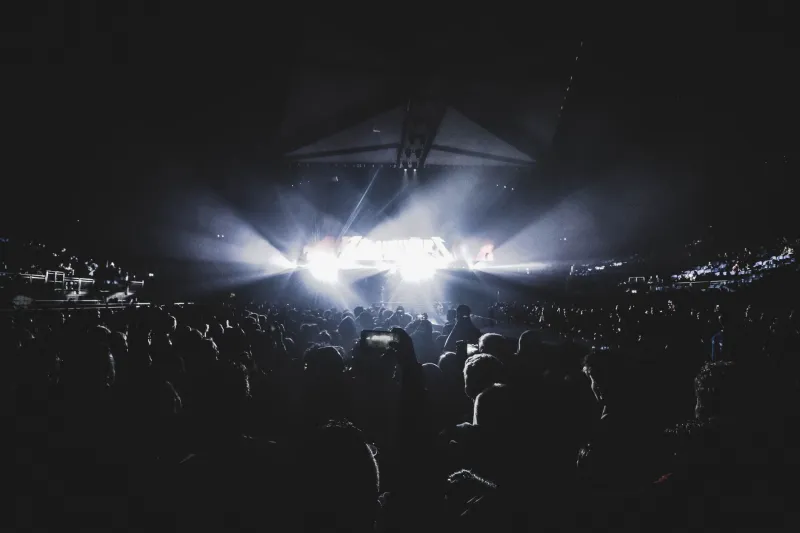
There's a moment that keeps happening at sold-out arenas across the country. An artist pauses mid-set, looks out at a sea of 60,000 phone flashlights, and says something that feels — impossibly — like it was meant just for you. You glance at the stranger next to you. They've got the same look on their face. That quiet, almost embarrassed recognition: did they just say exactly what I needed to hear?
This isn't an accident. It's not even magic, really. It's the result of a deliberate, fascinating shift in how performers think about the relationship between the stage and the crowd — and it's reshaping what a live performance even means in 2024.
The Old Model Doesn't Hold Anymore
For most of the 20th century, scale and intimacy were considered opposites. The bigger the venue, the more a performer had to lean into spectacle — pyrotechnics, elaborate staging, the kind of bombast that reads from the back row. Emotional nuance? That was for coffee-house sets and theater-in-the-round.
But something cracked that assumption open, and a lot of people point to social media as the crowbar. When artists started talking directly to fans on Instagram Stories, posting unfiltered voice memos, going live from their kitchen at midnight — the aesthetic of intimacy became deeply familiar to audiences. They got used to access. And then they started expecting it everywhere, including the arena.
Performers who figured this out early have a serious edge. They understood that the emotional vocabulary fans developed online — the parasocial closeness, the sense of shared private knowledge — could be imported into a live context if you were intentional about it.
Vulnerability as Stage Design
Ask any touring performer what separates a good show from a great one, and eventually the word "vulnerability" comes up. But vulnerability at scale is a craft, not just a feeling. It requires specific choices.
Take the practice of mid-show storytelling — those unscripted (or carefully scripted-to-sound-unscripted) moments where an artist steps away from the setlist and just... talks. Not to hype the crowd. Not to introduce the next song. Just to share something real, or something that feels real. A memory. A fear. A funny, embarrassing detail from the week before.
When it works, it's because the artist has mastered what psychologists call "self-disclosure reciprocity" — the social dynamic where one person sharing something personal creates an almost involuntary urge in the listener to feel close, to lean in, to reciprocate emotionally. In a stadium, that reciprocation plays out as 40,000 people collectively deciding, on some unconscious level, that this person knows them.
The performance itself hasn't changed. The crowd has. They're pre-loaded with context, history, and parasocial connection before they even walk through the gate.
Technology Isn't Killing the Vibe — It's Building It
Here's a counterintuitive take: the sea of phones that older critics love to bemoan might actually be deepening the sense of connection rather than diluting it. Not because of the recording, but because of the sharing that happens in real time and afterward.
When a fan posts a clip of an artist crying during a ballad, and that clip gets reshared across TikTok with captions like "she looked right at me" — even from people who weren't in the room — the performance extends outward into a communal experience that no single ticket-holder owns. Everyone gets a piece of it. The boundaries of the event blur.
Some performers are actively designing for this. They're creating "shareable moments" — not in the cynical, marketing-brief sense, but in the sense of giving audiences emotional peaks they'll want to pass along. A surprising cover. A breakdown followed by a joke. A callback to something they posted online six months ago that their most devoted fans will immediately recognize.
These are breadcrumbs for the community to follow together.
The Psychological Shift Nobody Talks About
What's less discussed is what this new model asks of the performer psychologically. Maintaining the feeling of one-on-one connection while managing the physical and mental demands of a massive production is genuinely hard. It requires a kind of split attention — staying emotionally present while simultaneously executing choreography, hitting technical marks, and managing an earpiece that's feeding you seventeen different audio cues.
Many performers describe learning to use the size of the crowd as a tool rather than an obstacle. Instead of trying to reach each person individually (impossible), they anchor to a feeling — a specific emotional truth — and trust that it radiates outward. Think of it less like broadcasting and more like tuning a frequency that everyone in the room can pick up if they're listening.
The artists who do this best tend to have a deeply specific internal monologue during performance. They're not thinking about the crowd as a mass. They're thinking about one person — a composite, maybe, of every letter they've received, every comment they've read, every face they've seen in the front row over a decade of touring.
What This Means for the Future of Live Performance
We're in the middle of a genuine reimagining of what a show is supposed to accomplish. The old transaction — you pay, we perform, we all go home — is giving way to something more like a shared ritual. Audiences aren't just spectators. They're participants in the construction of meaning.
That's a heavier ask of everyone involved. But when it lands, it lands differently than anything a pyrotechnics budget can buy. You leave a stadium feeling like something happened to you, not just for you.
And that distinction — subtle, almost philosophical — is exactly what the best performers in the business are chasing right now. Not a bigger stage. A smaller distance.